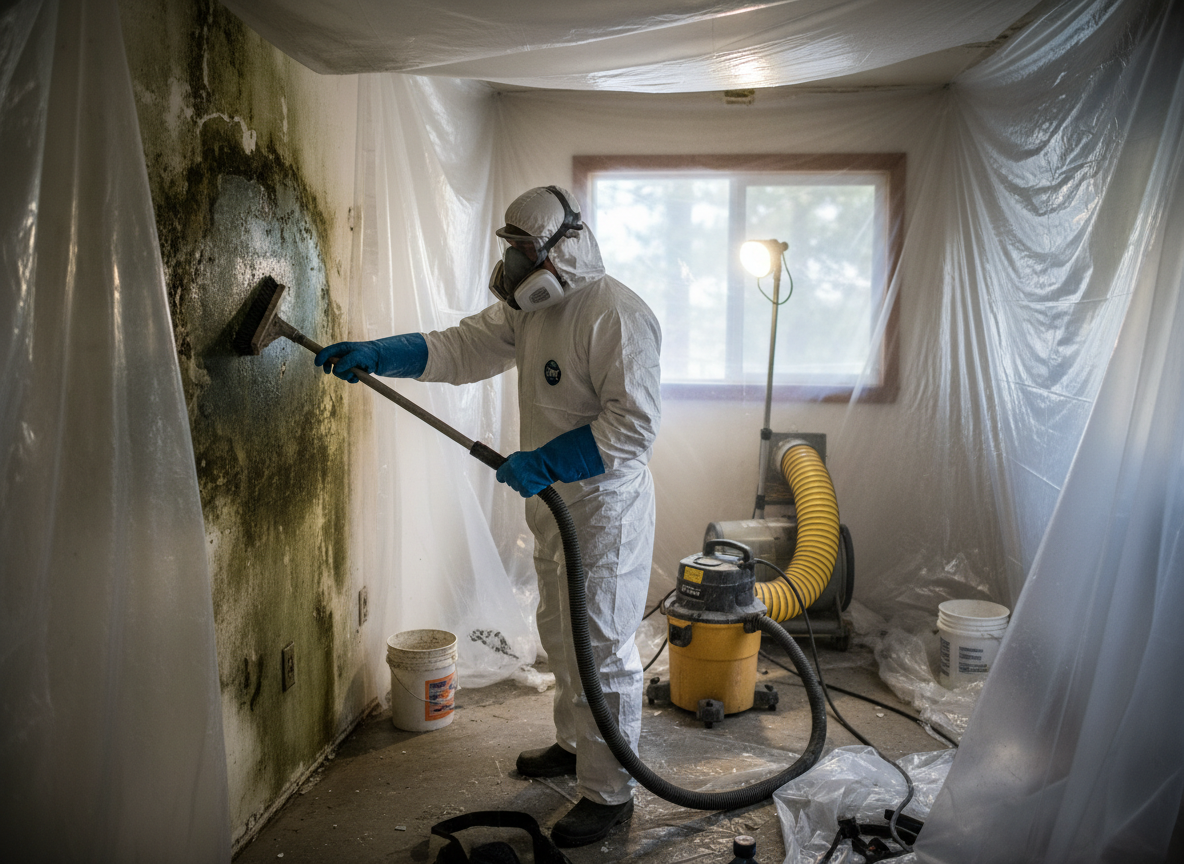
Cedar Glen sits in San Bernardino County at elevation near Lake Arrowhead where cold winters and warm summers create repeated freeze-thaw cycles. These swings drive moisture through older cabin-style roofs and crawl spaces common in the area. When that moisture meets cellulose materials in walls or attics, black mold colonies can establish quickly and release mycotoxins that affect indoor air. Proper toxic mold removal here requires negative air machines and sealed containment to prevent spores from migrating into living spaces during demolition.
Many Cedar Glen homes built before modern vapor barriers trap humidity against framing once winter temperatures drop. Removing toxic growth means cutting back affected drywall and insulation at least two feet beyond visible colonies while HEPA vacuuming every surface. Homeowners sometimes attempt bleach cleaning which leaves roots intact and allows regrowth within weeks. Our process focuses on source removal followed by antimicrobial treatment and moisture mapping with infrared cameras to locate hidden pockets behind knotty pine paneling typical in local builds.
San Bernardino County building standards require proper disposal of contaminated materials at approved landfills and documentation of clearance testing before re-occupancy. In steep terrain around Hook Creek Road, limited access can extend timelines because equipment must be carried in rather than rolled. We coordinate with local waste haulers familiar with mountain roads to keep jobs moving without leaving debris on site overnight that could attract wildlife or spread spores in high winds.
Technician insight
In Cedar Glen the thing that catches most people out with toxic mold removal is how quickly cold winter air against warm interior walls creates hidden condensation behind the tongue-and-groove paneling found in so many homes off Hook Creek Road. Homeowners often seal over the spots thinking the problem is solved only to see it return the next freeze cycle.
Hidden Growth Behind Paneling
A Cedar Glen cabin near Lake Arrowhead showed musty odors after heavy winter snowmelt. Inspection revealed toxic mold colonies growing on sheathing behind original knotty pine walls where roof leaks had gone unnoticed. We contained the rooms, removed the affected paneling and insulation, treated the framing, and ran drying equipment until moisture levels stabilized. Clearance testing passed and the owners were able to reopen the space without further issues.
How it works
- 1
Initial Assessment
Walk-through inspection of affected rooms plus moisture readings in attics and crawl spaces common to Cedar Glen homes.
- 2
Containment Setup
Plastic barriers and negative air machines isolate the work zone to stop spore spread into living areas near Lake Arrowhead.
- 3
Removal and Disposal
Cut out contaminated materials, bag them on site, and transport to approved San Bernardino County facilities.
- 4
Treatment and Drying
Apply EPA-registered antimicrobials then run dehumidifiers until wood moisture content returns to safe levels for mountain climate.
- 5
Clearance Testing
Independent air sampling confirms spore counts meet post-remediation standards before barriers come down.
Pricing
Upfront quotes after on-site inspection account for access challenges on mountain roads and extent of hidden growth in older Cedar Glen construction.