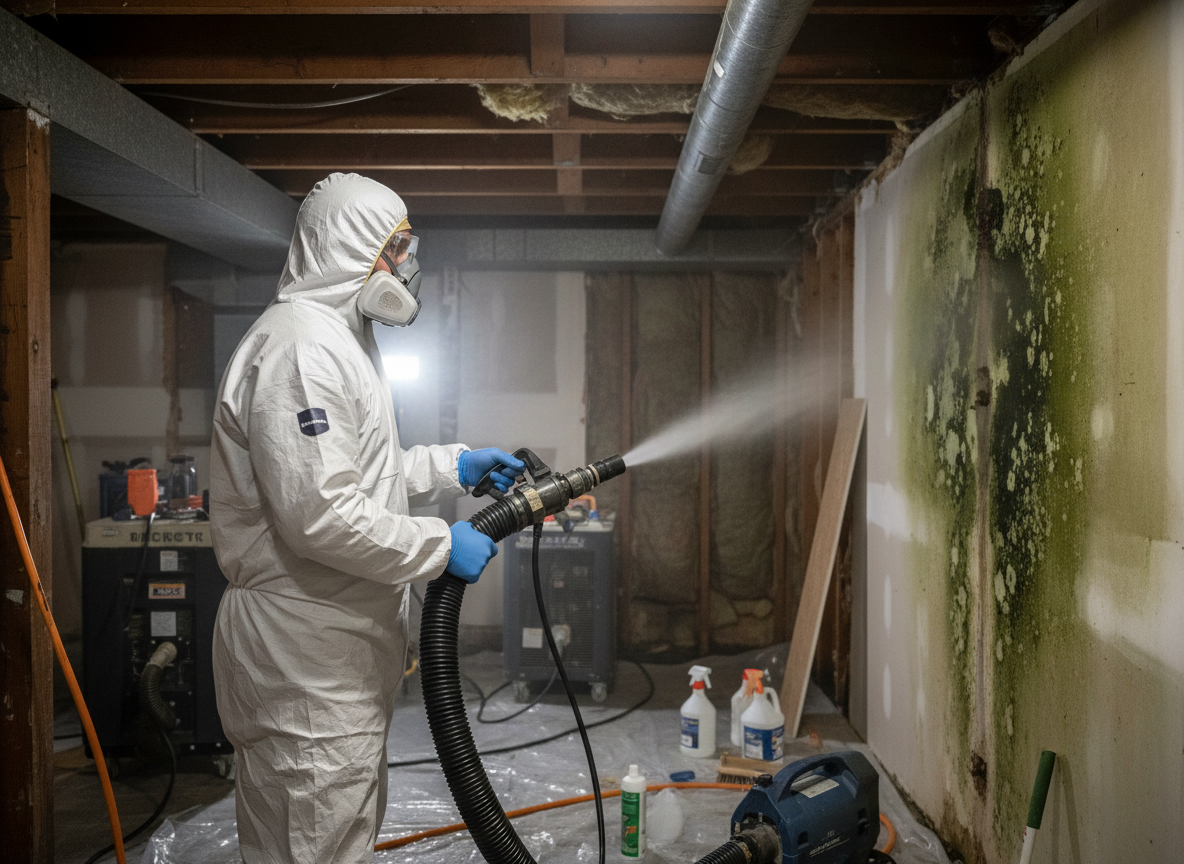
Cedar Glen homes built on sloped terrain near Lake Arrowhead often develop hidden mold colonies in crawl spaces and attics when warm summer humidity meets cold winter air infiltration. Odor removal requires locating the exact moisture source, usually snow melt or roof runoff pooling against foundations, then physically removing affected wood and insulation rather than masking smells. Standard air scrubbers alone fail when porous materials like older pine subfloors have absorbed spores over multiple seasons.
In San Bernardino County mountain properties, temperature swings create condensation cycles that push musty odors through HVAC ducts and wall cavities. Effective treatment includes HEPA vacuuming of all surfaces, application of EPA-registered antimicrobials to remaining framing, and negative air machines to prevent cross-contamination into living areas. Homeowners frequently overlook second-story bathrooms where poor venting allows mold to grow behind tile and release odors downward into bedrooms.
After source removal, odor neutralization in Cedar Glen relies on pairing activated charcoal filters with hydroxyl generators suited for enclosed mountain cabins. This approach avoids ozone damage to wood finishes common in local homes. Final clearance testing confirms both spore counts and volatile organic compounds have dropped below detectable levels before any reconstruction begins.
Technician insight
In Cedar Glen, the thing that catches most people out with odor removal mold is how cold winters drive snow melt under older homes built on slopes near Lake Arrowhead, allowing colonies to hide in dirt crawl spaces until summer warmth pushes the smell upstairs.
Persistent Odor in Cedar Glen Cabin
Homeowner reported musty smells in the living room after winter. Inspection revealed mold on subfloor joists from roof runoff near Lake Arrowhead. We contained the space, removed affected wood, treated framing, and ran hydroxyl generators until odors cleared. Follow-up sampling showed levels returned to normal.
How it works
- 1
Initial Assessment
Technician inspects all accessible areas including crawl spaces and attics for moisture intrusion tied to Cedar Glen's winter snow patterns.
- 2
Containment Setup
Plastic barriers and negative air machines isolate the work zone to stop spores from spreading through the home's HVAC system.
- 3
Source Removal
Physically cut out and bag moldy materials, then treat remaining surfaces with antimicrobial solutions.
- 4
Odor Neutralization
Deploy hydroxyl generators and HEPA air scrubbers until musty smells are eliminated from porous surfaces.
- 5
Clearance and Prevention
Conduct air sampling and advise on sealing entry points against future snow melt and summer humidity.
Pricing
Pricing varies with the extent of hidden growth and access difficulty in sloped Cedar Glen terrain.