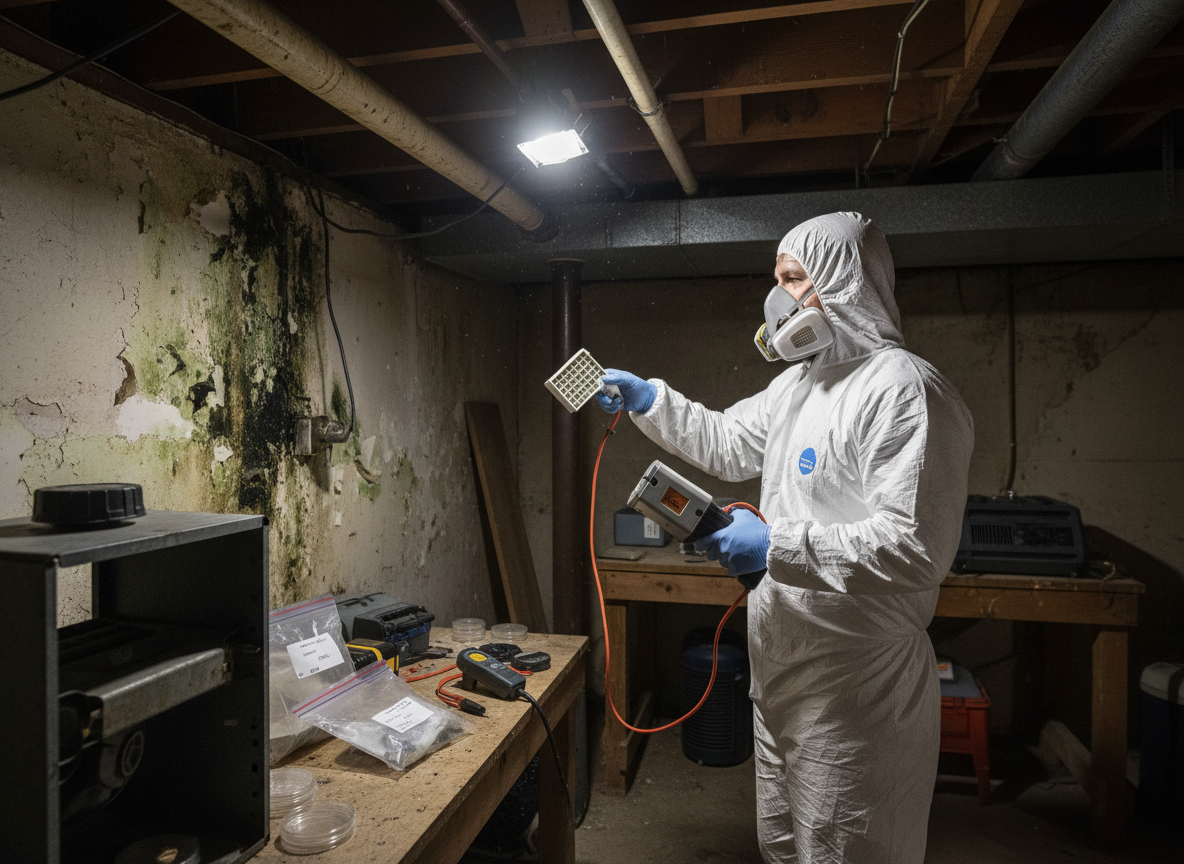
Mold spore testing in Cedar Glen requires attention to the mountain climate where warm summers give way to freezing winters that drive condensation inside attics and crawl spaces of older cabins. Homes near Lake Arrowhead and along Hook Creek Road often feature older wood framing and limited ventilation that trap moisture after snow melt, allowing hidden growth behind walls or under floors. Air sampling captures airborne spores while surface swabs identify active colonies on insulation or subflooring; both methods are essential because visual inspection alone misses microscopic spread common in these properties.
Sampling protocols must adapt to San Bernardino County terrain where steep slopes and variable soil drainage increase water intrusion risks during spring thaws. Technicians collect multiple samples from high-risk zones such as bathrooms, laundry areas, and roof eaves, then send them to independent labs for genus-level identification. Edge cases include false negatives from recent cleaning or HVAC circulation that redistributes spores, so testing occurs before any disturbance. California building codes emphasize moisture control in mountain zones, and reports note any code-related deficiencies that could affect insurance claims or resale.
Homeowners should avoid DIY kits because they lack calibrated pumps and fail to distinguish common outdoor spores from indoor amplification. Testing reveals whether remediation is needed or if elevated readings stem from seasonal pollen entering through unsealed mountain windows. Results include chain-of-custody documentation and recommended next steps tailored to Cedar Glen's mix of seasonal and year-round residences.
Technician insight
In Cedar Glen, the thing that catches most people out with mold spore testing is condensation forming in uninsulated attics during cold winter nights, especially in pre-1980s homes along Hook Creek Road where snow melt from Lake Arrowhead roofs soaks into rafters without visible leaks until spores show up in living areas.
Attic Testing After Winter Melt
A Cedar Glen homeowner reported musty odors following spring snow melt near Lake Arrowhead. Air samples from the living room and attic revealed elevated penicillium levels tied to roof-edge condensation. We documented moisture staining on older rafters and supplied a report recommending targeted drying before any further growth spread through the San Bernardino County cabin.
How it works
- 1
Site Assessment
Walk through the Cedar Glen property to identify moisture sources and high-risk zones created by cold winters and rooflines near Lake Arrowhead.
- 2
Sample Collection
Perform calibrated air sampling and surface swabs in living spaces, attics, and crawl areas while documenting conditions specific to San Bernardino County mountain homes.
- 3
Laboratory Analysis
Submit samples for independent genus identification and spore count comparison against outdoor baselines typical for the area.
- 4
Report Delivery
Provide written findings with location maps, photos, and guidance on whether further remediation is warranted for the tested structure.
Pricing
Pricing varies by number of samples and property size; basic assessments start with a site visit and scale with additional testing points.