Cedar Glen sits in the San Bernardino Mountains where warm summers give way to freezing winters that drive condensation inside attics and crawl spaces. Homes built decades ago along Hook Creek Road and surrounding ridges often have limited ventilation and older insulation that traps moisture from snow melt running down the slopes. A mold remediation service Cedar Glen must account for these elevation shifts because water can travel under floor joists and reappear weeks later in finished rooms near Lake Arrowhead.
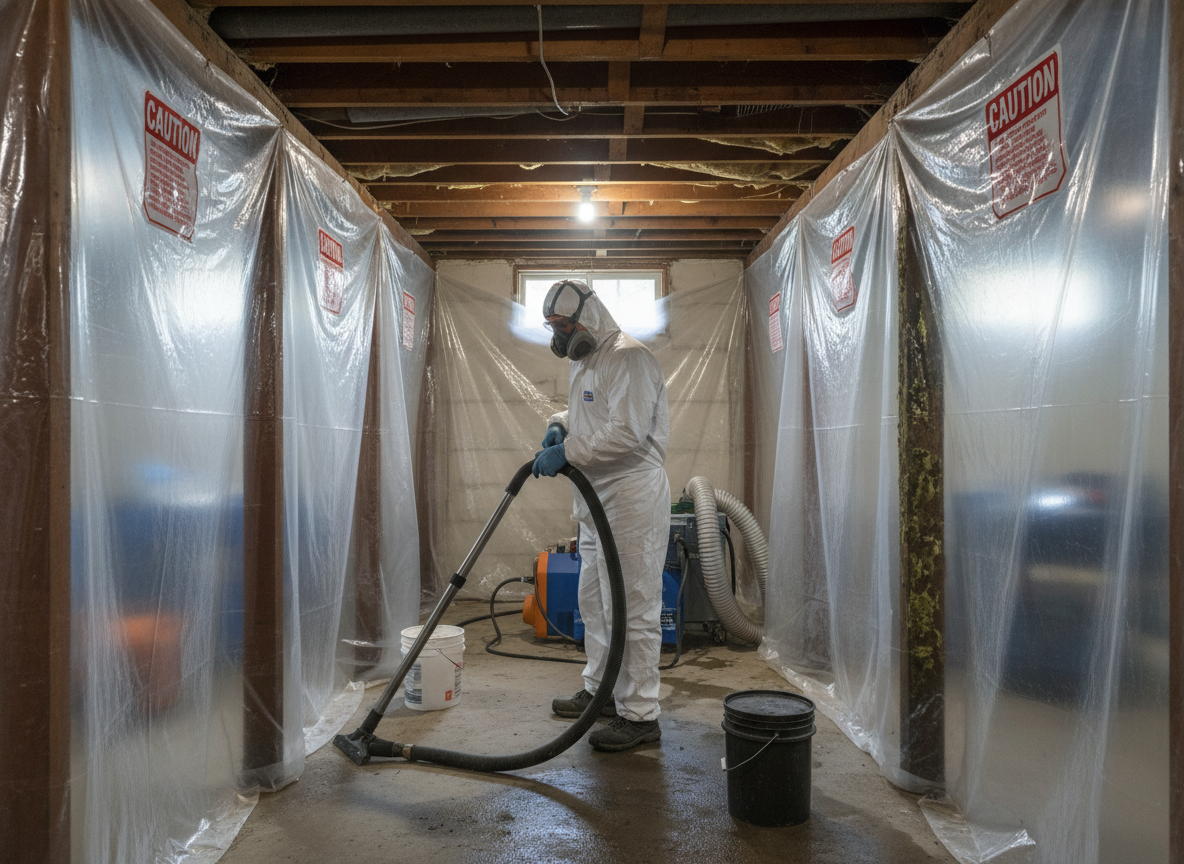
Technicians start by mapping moisture with meters rather than relying on visible spots alone. In this terrain, runoff from higher elevations frequently enters through foundation cracks or around utility penetrations that standard suburban homes do not face. Removing affected drywall or subflooring requires negative air machines to keep spores from drifting into occupied spaces, especially when winter winds push air through the same paths the moisture followed.
After containment and removal, drying focuses on the mountain climate reality that cold nights slow evaporation even when daytime temperatures rise. Dehumidifiers run longer here than in the valleys below, and follow-up checks verify that hidden cavities behind kitchen cabinets or along exterior walls have returned to safe levels before any new materials are installed.
Technician insight
In Cedar Glen, the thing that catches most people out with mold remediation near me is how winter snow melt runs under the house along the slope before anyone notices. Older homes on Hook Creek Road often have dirt crawl spaces that stay damp for months because cold nights keep the ground from drying, so the mold keeps coming back until the drainage is fixed.
Winter Condensation in Attic
Homeowner near Lake Arrowhead noticed musty smell after first freeze. Inspection found condensation collecting on roof decking above an unvented attic. We contained the space, removed wet insulation, treated the sheathing, and improved airflow so the next cold snap would not repeat the cycle.
How it works
- 1
Initial Assessment
Technician arrives within hours, uses moisture meters and thermal imaging to locate hidden water in attics, crawl spaces, and wall cavities typical of Cedar Glen homes.
- 2
Containment Setup
Plastic barriers and negative air machines isolate the work zone so spores do not spread through the open floor plans common in mountain cabins near Lake Arrowhead.
- 3
Removal and Cleaning
Affected materials are removed, surfaces treated with EPA-registered antimicrobials, and HVAC systems cleaned when mold has entered ductwork from winter condensation.
- 4
Drying and Verification
Industrial dehumidifiers and air movers run until readings meet industry standards, followed by a final inspection before reconstruction begins.
Pricing
Upfront quotes provided after inspection; final cost depends on extent of hidden moisture and access in older mountain construction.