Cedar Glen sits in San Bernardino County at elevation near Lake Arrowhead where winter temperatures routinely drop below freezing. This creates condensation on roof decks and in crawlspaces of older cabins and homes built before modern vapor barriers became standard. Warm summer days then drive humidity into those same cool cavities, allowing hidden mold colonies to expand along framing and insulation without visible signs on interior walls.
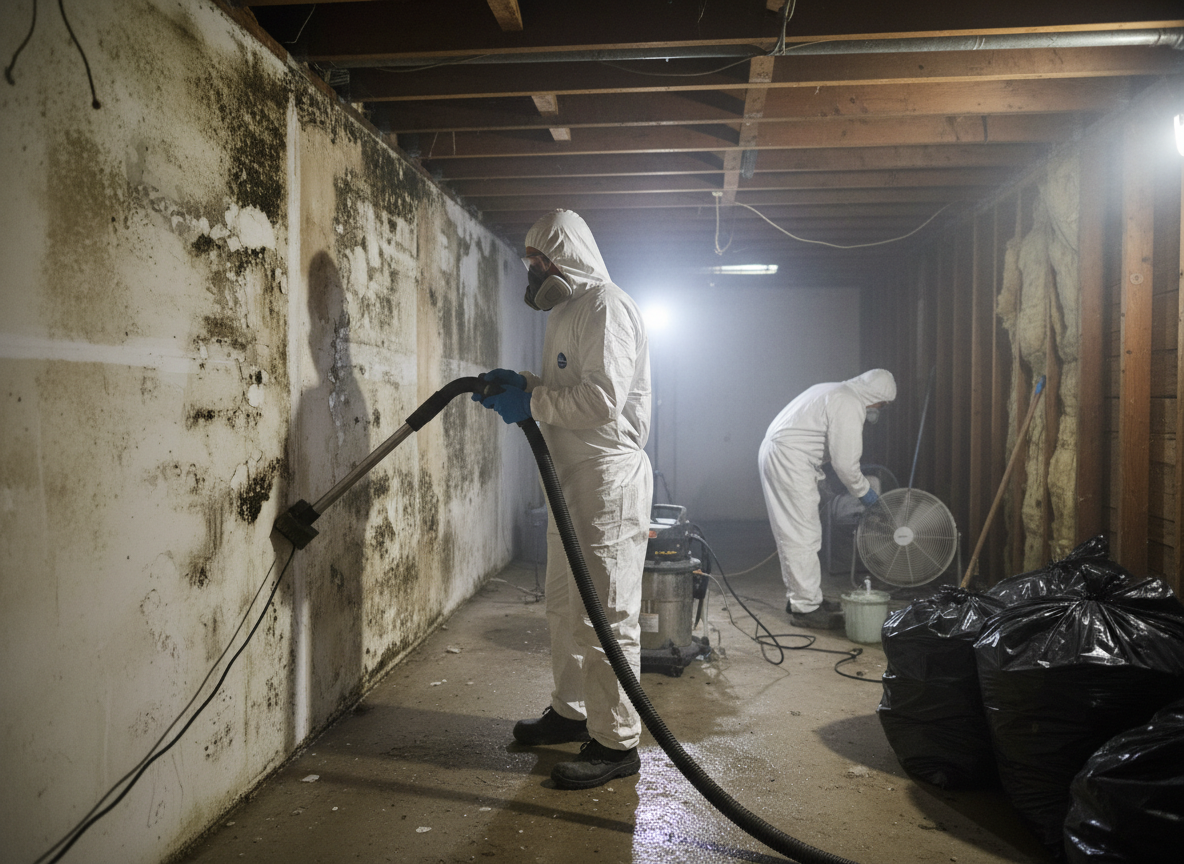
Remediation here often requires removing baseboards and sections of subfloor to reach moisture trapped against the soil. Standard drywall removal alone misses the edge cases common in these properties where plumbing runs through unconditioned attics that freeze and thaw repeatedly. Containment must account for steep driveways and narrow access typical of Hook Creek Road properties so negative air machines do not pull air from neighboring lots.
After source removal the drying phase must continue until wood moisture content reads below 12 percent because the mountain climate can reintroduce moisture within days if fans are pulled too soon. Homeowners sometimes attempt bleach cleaning on visible surface growth only to see recurrence once the first cold front arrives and drives new condensation into the same untreated cavities.
Proper remediation includes sealing any soil-to-wood contact points that are common in older Cedar Glen builds and installing vapor retarders where none existed. These steps prevent the cycle of winter moisture loading followed by summer mold bloom that repeatedly affects homes around the lake.
Technician insight
In Cedar Glen the thing that catches most people out with mold remediation company is the way cold winters push condensation into attics of 1960s and 1970s cabins near Lake Arrowhead where no one ever installed ridge vents. Homeowners see a small ceiling stain in summer and assume surface cleaning will fix it, but the real growth stays in the insulation until the next freeze cycle restarts the moisture load.
Hidden Attic Growth After Winter Freeze
A Cedar Glen homeowner noticed musty air in an upstairs bedroom after the first spring thaw. Inspection found saturated insulation and mold along the north roof deck where melting snow had entered through an ice dam. Crews removed the affected insulation and sheathing, dried the rafters to 10 percent moisture, and added ventilation baffles before reinstalling new insulation.
How it works
- 1
Initial Assessment
Technicians arrive within hours and use moisture meters plus thermal imaging to map hidden water behind walls and under floors in Cedar Glen homes.
- 2
Containment Setup
Plastic barriers and negative air machines isolate the affected zone so spores do not spread through the rest of the house during removal.
- 3
Material Removal
Infested drywall, insulation, and trim are cut out and bagged for disposal while wood framing is sanded or treated to remove remaining growth.
- 4
Drying and Clearance
Industrial dehumidifiers and air movers run until readings confirm safe moisture levels, followed by a final inspection before barriers come down.
Pricing
Cost depends on square footage affected, depth of hidden growth, and access difficulty in mountain terrain; upfront written quotes provided before work begins.