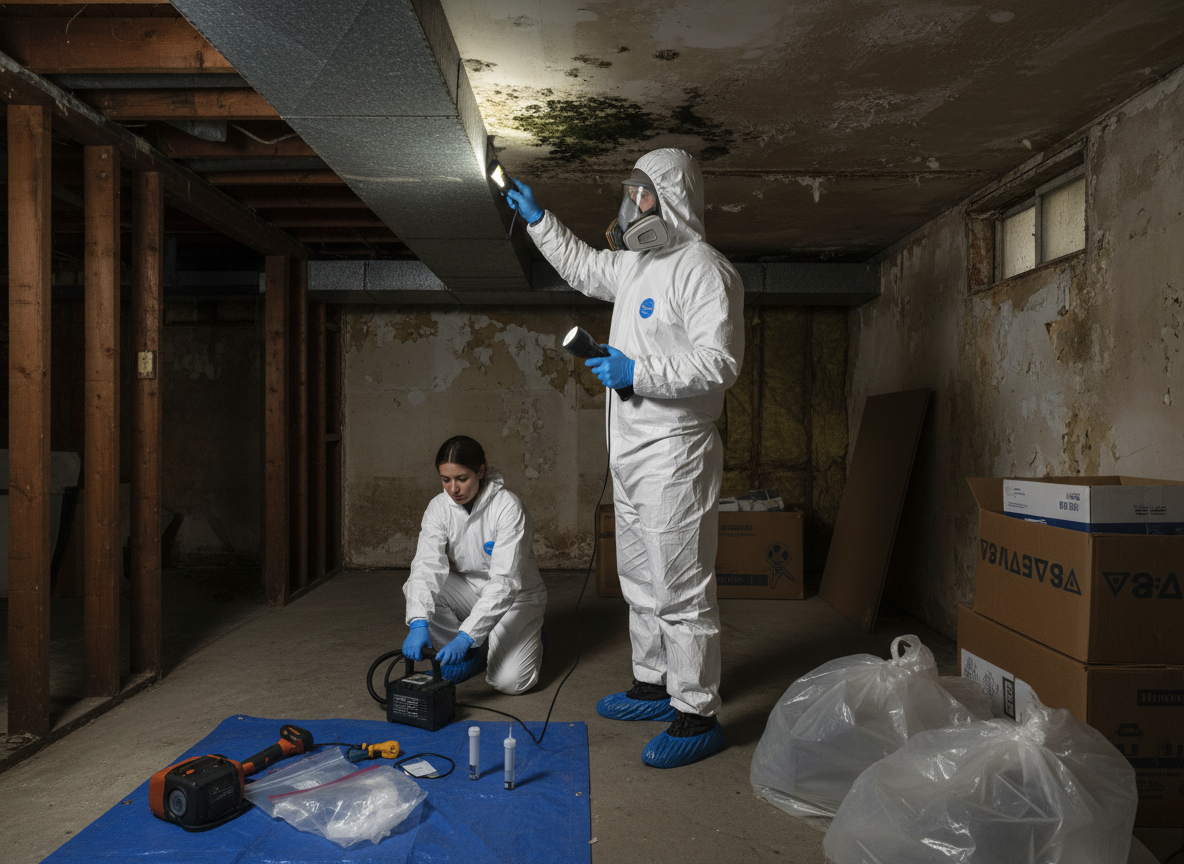
Cedar Glen homes built decades ago near Hook Creek Road often feature crawl spaces and attics that trap moisture when winter temperatures drop below freezing and then warm rapidly in spring. During a Home mold inspection we use moisture meters and borescopes to check behind cedar paneling and in fiberglass batt insulation where condensation from the mountain climate commonly forms. San Bernardino County building practices from earlier eras left many properties without modern vapor barriers, so inspectors must pull back baseboards and examine subfloor sheathing that Lake Arrowhead runoff can saturate.
Warm summer afternoons followed by cool nights create daily humidity swings that allow mold to colonize HVAC ducts and ceiling joists in single-story cabins around Cedar Glen. We map every air handler and register, testing supply and return plenums because spores travel through the ductwork when filters are undersized for mountain pollen loads. Edge cases include mold growing on the back side of drywall in bathrooms that lack proper exhaust fans, a frequent finding when older homes were expanded without updating ventilation codes.
Homeowners sometimes overlook exterior grading around foundations on sloped lots near Lake Arrowhead, allowing snowmelt to pool against stem walls. Our inspection includes a full perimeter walk to note drainage issues that push water under sill plates, then we document findings with photos and moisture readings before any remediation begins. This prevents unnecessary wall openings and gives owners clear locations to address before the next cold season arrives.
Technician insight
In Cedar Glen, the thing that catches most people out with Home mold inspection is hidden condensation on the underside of roof sheathing in winter when snow sits on the roof for weeks and attics lack ridge vents. Older cabins along Hook Creek Road often have this issue because the original builders never accounted for the freeze-thaw cycles that push moisture into the insulation above bedrooms.
Cedar Glen Attic Inspection After Winter
A homeowner noticed a musty smell in an upstairs bedroom after the first warm spell following heavy snow. We found elevated moisture on the north-facing roof deck where melting snow had wicked into the insulation. The inspection confirmed active mold growth on the sheathing and recommended targeted removal plus added ventilation before the next freeze.
How it works
- 1
Initial Walkthrough
We review the property history and note any musty odors or water stains reported by the owner while walking every room, attic access, and crawl space entry.
- 2
Moisture and Humidity Mapping
Using calibrated meters we record relative humidity and surface moisture levels in walls, floors, and ceilings, focusing on areas where cold winter air meets warmer interior surfaces.
- 3
Visual and Tool-Assisted Inspection
Borescopes and infrared cameras reveal hidden growth behind insulation and under subfloors without demolition, paying special attention to older cedar homes near Hook Creek Road.
- 4
Documentation and Recommendations
Findings are compiled into a written report with photos, moisture logs, and prioritized next steps for any confirmed mold or moisture sources.
Pricing
Pricing varies by square footage, number of stories, and whether crawl space or attic access is limited; contact us for an upfront quote based on your Cedar Glen property.