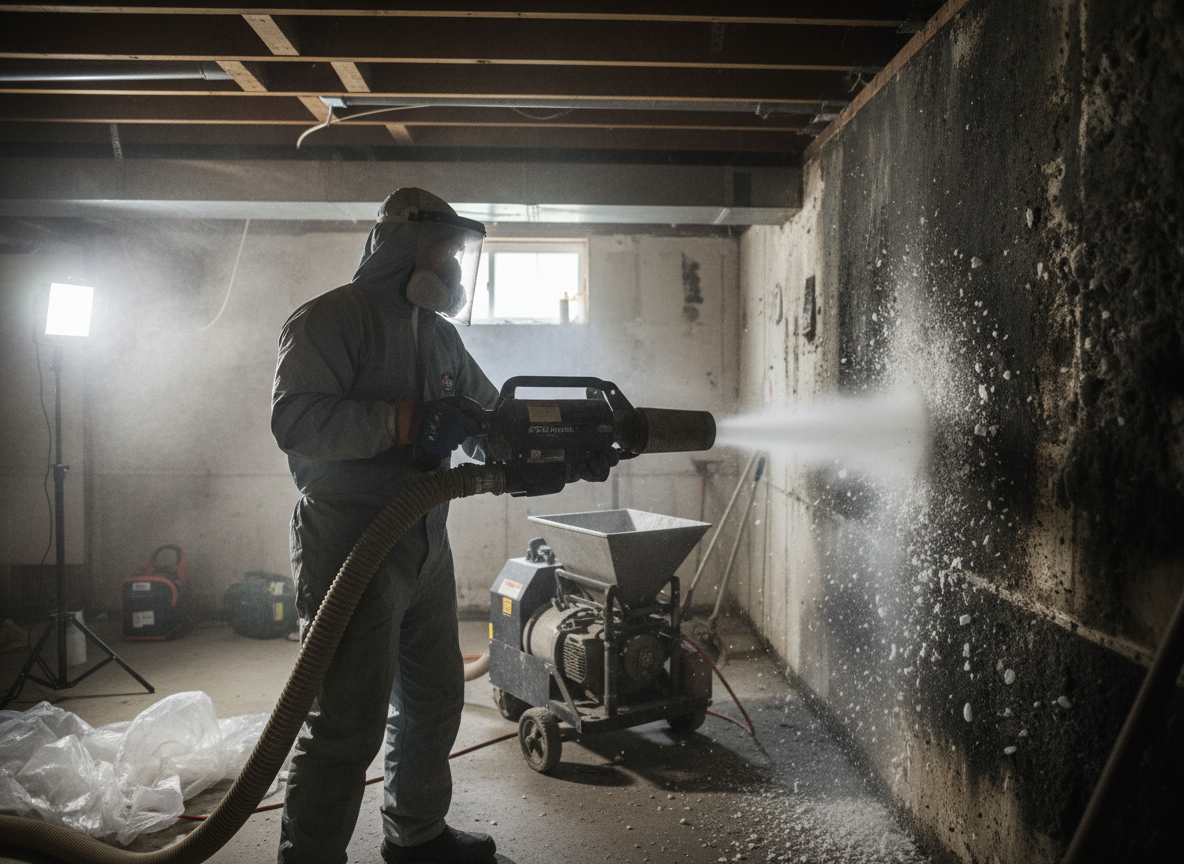
Dry ice blasting propels frozen CO2 pellets at high velocity to lift mold from wood, concrete, and insulation without introducing water. In Cedar Glen's older cabins and homes built decades ago around Lake Arrowhead, this method reaches tight spaces between logs and under floor joists where moisture from snow melt and cold winters collects. The pellets sublimate on contact, leaving no secondary waste that could re-wet surfaces in San Bernardino County's variable mountain weather.
Edge cases include hidden mold behind cedar siding or in roof decking after heavy winter storms. Blasting avoids the risk of pushing spores deeper into porous materials, a common issue when power washing in steep terrain. Technicians monitor pellet size and pressure to prevent damage to soft woods common in local construction while still dislodging colonies rooted in condensation from warm summer days meeting cold nights.
Code considerations in San Bernardino County require containment and HEPA filtration during any remediation; dry ice blasting integrates easily with negative air machines because it produces no liquid runoff. Homeowners should note that blasting alone does not fix the moisture source, so crews always inspect roof leaks and ventilation gaps typical in hillside properties near Hook Creek.
Seasonal timing matters. Winter calls often involve attics where ice dams create hidden pockets; summer jobs focus on crawlspaces where warm air meets cool ground. Both conditions accelerate mold growth in Cedar Glen's elevation-driven climate, making dry ice effective for thorough surface cleaning before repairs.
Technician insight
In Cedar Glen, the thing that catches most people out with dry ice blasting mold is how quickly cold winter air pulls moisture back into attics after a warm spell. Older cabins near Lake Arrowhead often have poor ridge venting that lets condensation reform on the same sheathing we just cleaned, so the job always includes checking those vents before we leave.
Attic Mold After Winter Storm
A Cedar Glen homeowner noticed musty smell in the upstairs after heavy snow. Inspection found mold on roof decking where ice dams had formed. Dry ice blasting cleared the colonies from the wood without wetting insulation. Follow-up ventilation adjustments addressed the seasonal moisture cycle.
How it works
- 1
Initial Assessment
Technician inspects affected areas in Cedar Glen homes, identifies moisture sources tied to mountain weather, and maps containment zones.
- 2
Containment Setup
Plastic barriers and negative air machines isolate the work area to prevent spore spread through older cabin layouts.
- 3
Dry Ice Blasting
Pellets are applied at controlled pressure to remove mold from wood, insulation, and concrete without added moisture.
- 4
HEPA Vacuum and Wipe Down
Loose debris is captured and surfaces are cleaned to remove any remaining residue before final clearance testing.
- 5
Moisture Source Correction Guidance
Recommendations address local factors like roof ventilation and snow melt drainage to prevent recurrence.
Pricing
Project pricing depends on square footage, access difficulty in hillside homes, and extent of hidden growth; 24/7 dispatch available from our Cedar Glen location.