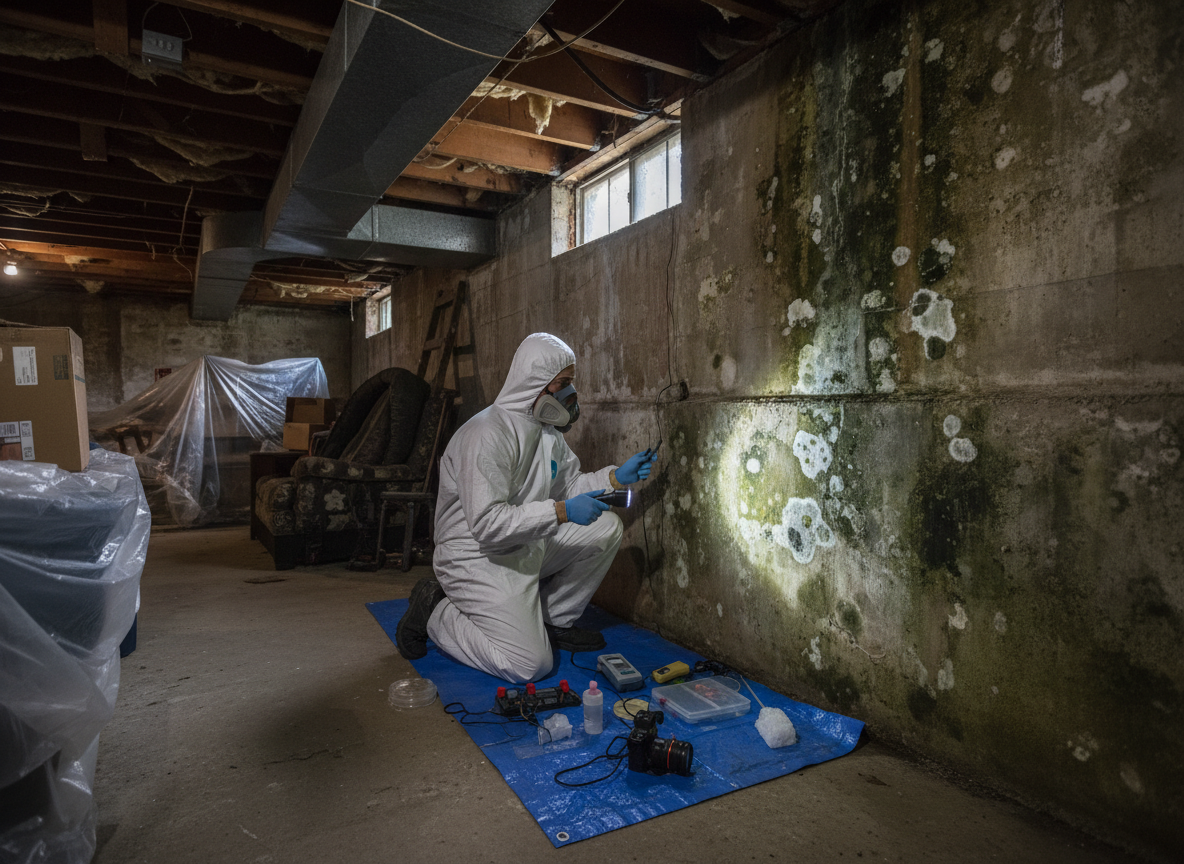
Cedar Glen basements in San Bernardino County often sit below grade on sloped terrain near Lake Arrowhead where winter snow melt and spring runoff create persistent moisture pockets. Older homes here typically feature wood framing, unsealed concrete, and minimal vapor barriers that allow condensation when temperatures swing from cold nights to warmer days. A thorough inspection targets these hidden zones behind insulation, under stairs, and along sill plates rather than relying on surface sightings alone.
Moisture meters and thermal imaging reveal active intrusion points that standard visual checks miss, especially in crawl-adjacent basements common throughout Cedar Glen. Cold winters drive warm indoor air against chilled foundation walls, producing drip lines that feed mold on drywall paper and wood joists. Technicians also check HVAC returns and dryer vents that pull basement air into living spaces, a frequent pathway in these compact mountain layouts.
Edge cases include finished basements where paneling conceals growth and homes with prior roof leaks that channel water downward through framing. Local building practices from earlier decades left many properties without proper grading or French drains, so inspectors map water flow from surrounding slopes. Findings guide whether remediation stays limited to the basement or requires attic and wall cavity checks to stop cross-contamination.
Homeowners should avoid disturbing suspected areas before inspection because disturbing spores can spread them through the tight floor plans typical in Cedar Glen. Documentation of moisture levels and growth locations provides the baseline for any follow-up work while meeting San Bernardino County expectations for habitable space assessments.
Technician insight
In Cedar Glen, the thing that catches most people out with Basement mold inspection is how cold mountain winters force condensation against older concrete foundations near Lake Arrowhead, especially on properties where snow melt pools against the uphill side of the house in San Bernardino County.
Winter Condensation in Cedar Glen Basement
Owner reported musty odor after first hard freeze. Inspection located elevated moisture along the north foundation wall where snow had drifted against the home. Thermal imaging showed cold spots behind paneling with active mold on the drywall backing. Targeted removal of affected sections and source correction stopped further growth.
How it works
- 1
Site Walk and History Review
Technician reviews property age, past water events, and basement layout while walking the space with the homeowner.
- 2
Moisture Mapping
Readings taken on walls, floors, and framing using calibrated meters to locate active damp zones from seasonal melt.
- 3
Visual and Tool Inspection
Thermal scans and borescope checks behind accessible finishes to identify hidden colonies without unnecessary demolition.
- 4
Findings Report and Recommendations
Written summary of moisture sources, mold locations, and next-step options delivered same day when possible.
Pricing
Upfront quotes based on square footage, access difficulty, and whether finished surfaces require partial removal for inspection.