Cedar Glen sits in the San Bernardino Mountains where winter temperatures often drop below freezing while summers bring warm, humid air off Lake Arrowhead. These swings push moisture into crawl spaces and attics of older wood-frame cabins, especially those built before modern vapor barriers became standard. Air quality and mold testing here must account for both cold-weather condensation on subfloor insulation and summer humidity that lingers in poorly ventilated bathrooms and laundry rooms.
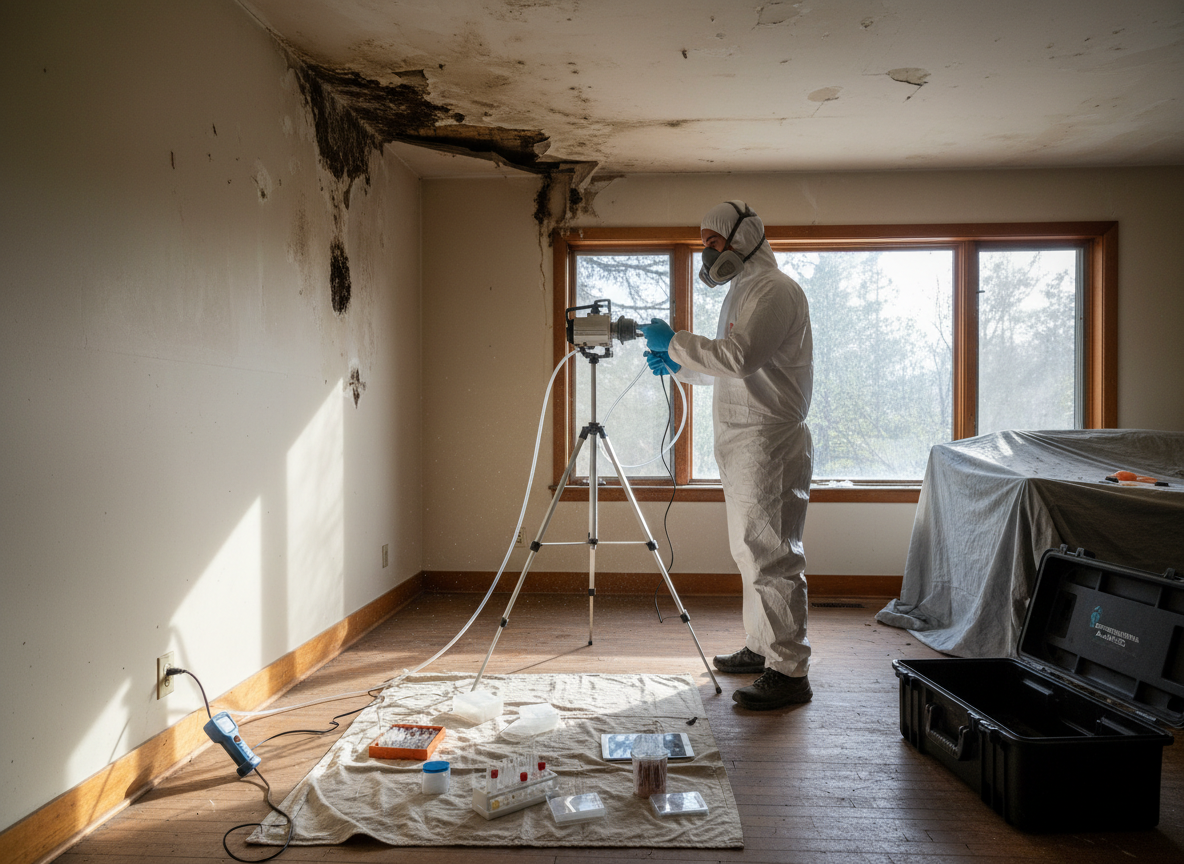
Testing begins with calibrated moisture meters and thermal imaging to locate hidden damp zones behind cedar siding or under pier-and-beam floors common in this area. Air samples are collected from multiple rooms plus the crawl space, then compared against outdoor baselines to identify indoor spore amplification. We also check for volatile organic compounds that can spike when mold grows on OSB sheathing or particleboard cabinets after roof leaks from heavy winter storms.
Homeowners frequently overlook the impact of seasonal freeze-thaw cycles on foundation vents. When vents ice over, trapped moisture feeds mold on floor joists. Our reports include room-by-room readings and clear recommendations for ventilation upgrades that work with the steep terrain and limited access typical of Hook Creek Road properties.
Seasonal Guidance
Testing after the first hard freeze or right after snowmelt often reveals issues missed during dry summer months. We schedule follow-up visits during the coldest weeks to confirm remediation success before spring humidity arrives.
Technician insight
In Cedar Glen, the thing that catches most people out with Air quality and mold testing is how cold winter nights pull warm, moist air from Lake Arrowhead into uninsulated crawl spaces under 1960s cabins along Hook Creek Rd. Homeowners open vents in summer then forget them when temperatures drop, trapping condensation that never dries.
Hidden moisture under winter ice
A Cedar Glen homeowner noticed musty air after the first freeze. We mapped elevated moisture on subfloor joists where vents had iced shut. Air samples confirmed Penicillium amplification. Targeted ventilation adjustments and source removal cleared the readings within two weeks.
How it works
- 1
Initial Assessment
Walk the property inside and out, noting rooflines, crawl-space access, and proximity to Lake Arrowhead runoff paths.
- 2
Moisture Mapping
Use meters and infrared to mark damp areas on floors, walls, and ceilings common in Cedar Glen cabins.
- 3
Air Sampling
Collect indoor and outdoor samples plus crawl-space readings to compare spore levels against mountain baselines.
- 4
Report and Recommendations
Deliver written findings with prioritized next steps for ventilation or targeted removal.
Pricing
Cost depends on square footage, number of samples, and crawl-space access; call 24/7 for a direct quote.