2026-10-17 ·
How Snowmelt Contributes to Attic Mold in Cedar Glen Homes
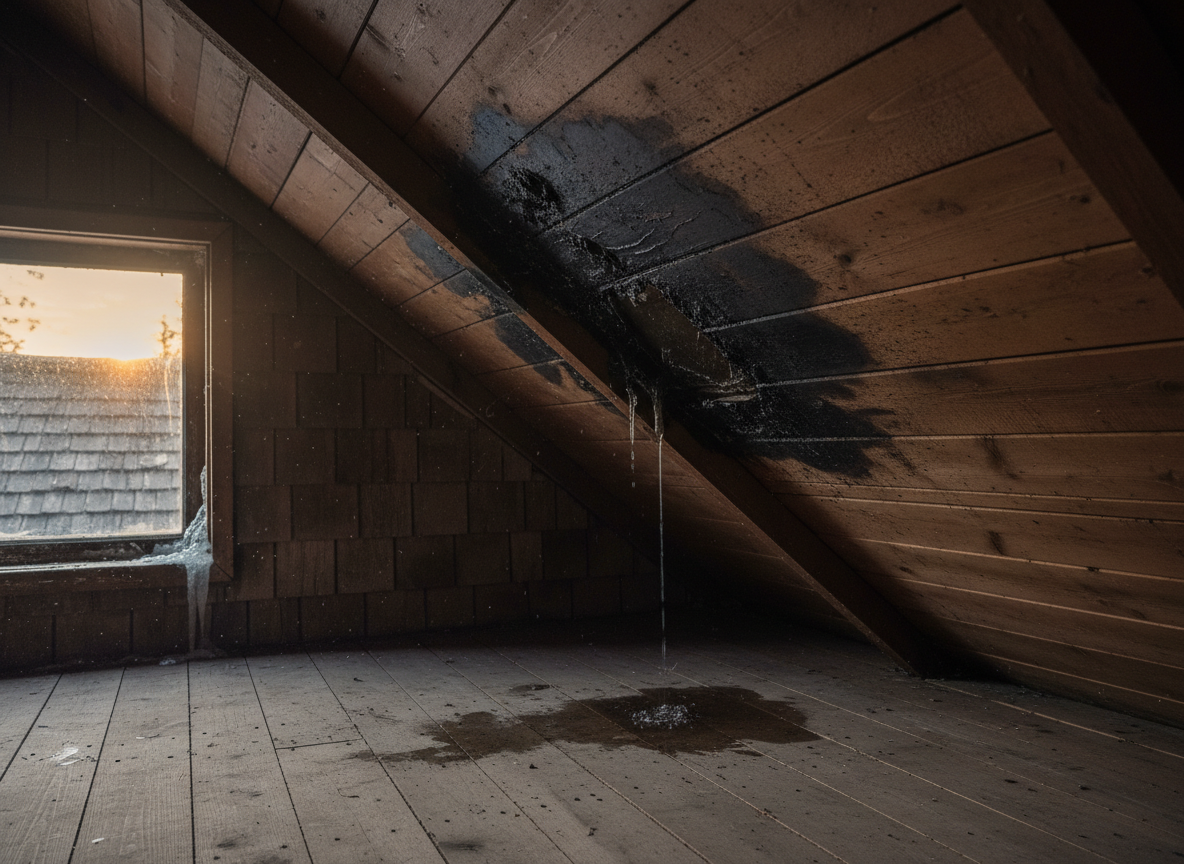
Snowmelt contributes to attic mold in Cedar Glen homes when ice dams form along roof edges during the mountain climate's cold winters, trapping meltwater under shingles so it drips into attics and sustains mold growth through repeated freeze-thaw cycles across San Bernardino County.
Ice Dam Formation in Local Mountain Winters
Cedar Glen sits at elevation in San Bernardino County near Lake Arrowhead, where winter temperatures regularly drop below freezing after daytime snow accumulation. Warm summer days give way to nights that refreeze roof-edge snow into solid barriers. These ice dams block normal drainage, forcing meltwater backward under shingles and felt paper. Homes built decades ago often feature older roof designs with limited overhangs and minimal heat tape, increasing the chance of water reaching attic sheathing. The process repeats across multiple storms each season, delivering small but steady amounts of liquid into insulation and rafters where ventilation is already restricted by steep terrain and dense tree cover.
Moisture Pathways Into Cedar Glen Attics
Once water breaches the roof deck it travels along rafters and pools in low spots created by the angled terrain common throughout Cedar Glen and nearby neighborhoods. Standard fiberglass batts absorb the liquid and hold it against wood surfaces for days, raising relative humidity above 60 percent even after the exterior snow has gone. Warm summer temperatures then accelerate spore germination on the damp wood and paper backing. Because many local cabins lack ridge vents or have soffit intakes blocked by pine needles, the trapped moisture cannot escape quickly. The cycle leaves visible staining on ceiling drywall and musty odors that intensify each spring thaw.
Early Recognition and Inspection Steps
Homeowners notice dark spots on attic sheathing or insulation that feels spongy weeks after the last snow. A systematic check starts at the north-facing roof edges where ice dams form most often, then moves inward along rafters for discoloration or soft spots. Measuring moisture content in wood with a meter shows readings above 15 percent in affected zones. Comparing these findings against unaffected areas helps isolate the entry points. Linking this inspection to professional attic mold testing and removal provides documented spore counts and identifies whether hidden growth extends into wall cavities common in older Cedar Glen properties.
Practical Steps to Reduce Future Risk
Improving attic ventilation by adding or clearing ridge and soffit vents reduces the humidity that follows each melt event. Installing self-regulating heat cables along eaves prevents ice dam buildup without overheating the roof deck. Sealing penetrations around plumbing vents and chimneys stops additional water entry points. For properties near Lake Arrowhead or in Running Springs, scheduling these upgrades before the first heavy snowfall addresses the specific freeze-thaw pattern of the region. Readers exploring related topics can review Cost Factors for Mold Removal in Cedar Glen Cabins and Inspecting Older Cedar Glen Properties for Hidden Mold to understand inspection timing and repair scope.